


Vestibular Rehabilitation / Physical Therapy
Vestibular rehabilitation is designed for people who suffer from vestibular dysfunction and related vestibular disorders. At COPT, we offer vestibular rehabilitation for patients suffering from a vestibular disorder or dysfunction diagnosis. We understand how much this issue can affect your physical well-being and offer the treatment plan you will need to feel your best and live a normal, healthy life
What is Vestibular Dysfunction?
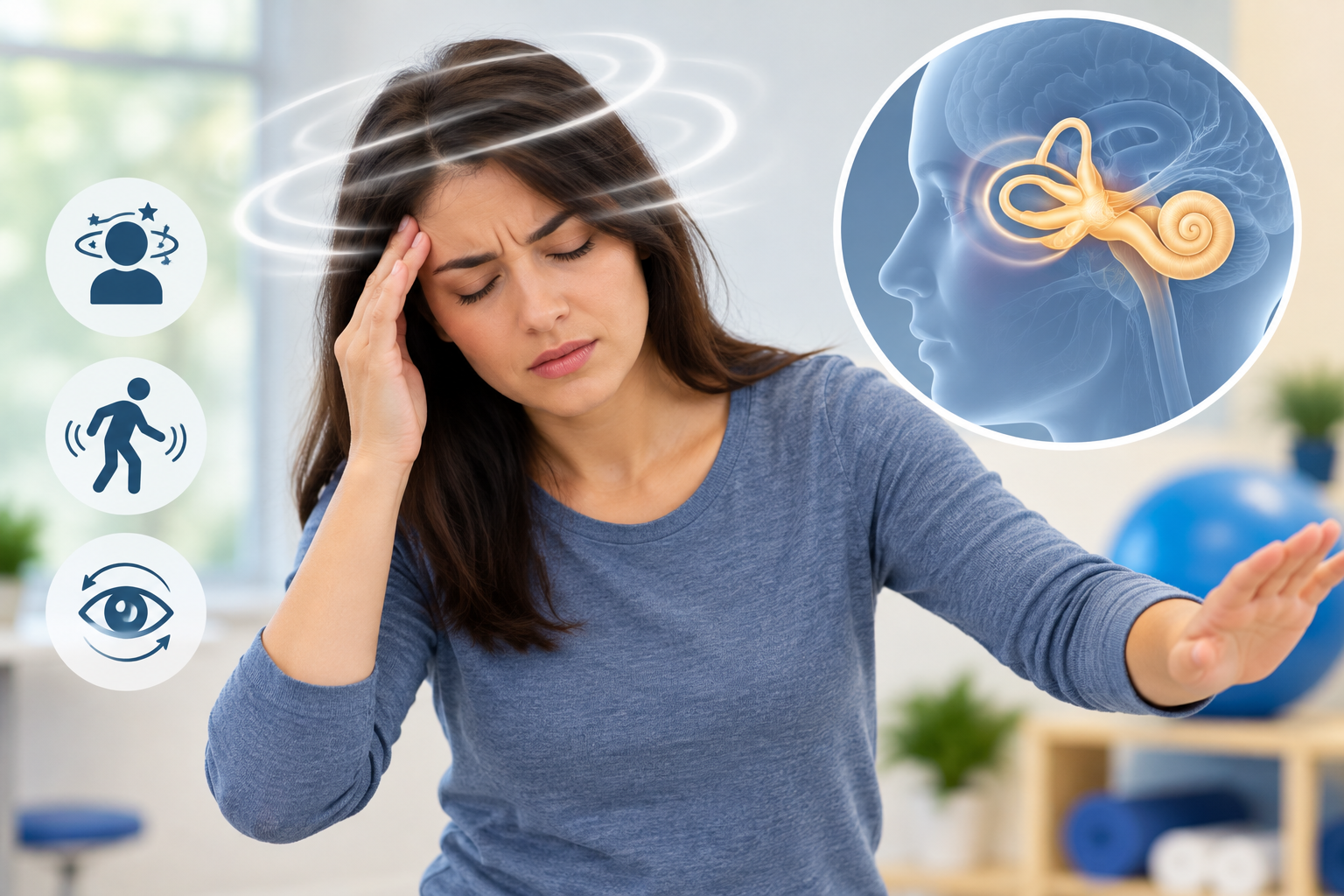
The vestibular system consists of the parts of the inner ear and the brain that process the sensory information necessary for controlling balance and eye movements. When a vestibular dysfunction or disorder occurs, whether by injury or disease, one can experience severe imbalance issues and nauseating dizziness, making activities of daily living and exercise extremely difficult. Unfortunately, the onset of these symptoms can cause the afflicted to adopt a sedentary lifestyle if not addressed quickly and appropriately. A sedentary lifestyle, as we all know, can create additional issues for one’s health and body and therefore it is important to get the help and proper treatment you need when it comes to vestibular dysfunction.
Diagnosing Vestibular Dysfunction
Vestibular dysfunction and vestibular disorders are somewhat tricky to diagnose, as they require several tests to ensure the dizziness and/or vertigo is not related to a different health condition. A primary care physician, ENT or neurologist is responsible for diagnosing a vestibular disorder, due to the testing involved. After a diagnosis is made, treatment can begin to help patients suffering with vestibular disorders and dysfunctions.
Vestibular Rehabilitation
There are several different treatments, or combinations of treatments, which patients suffering from vestibular disorders will need in order to begin living symptom-free. COPT offers vestibular rehabilitation, a type of treatment that should be included in any vestibular treatment plan. Vestibular rehabilitation is an exercise-based program designed to address the primary symptoms of this disorder: vertigo and dizziness, gaze instability and imbalance.
Vestibular rehabilitation begins with a one-on-one evaluation with one of COPT Physical Therapists', who will work with the patient to determine the exact signs and symptoms the patient is dealing with in order to create an individualized treatment plan that addresses these issues.
What conditions will benefit from Vestibular Therapy?
Some conditions which will benefit from Vestibular Therapy are:
- Benign paroxysmal positional vertigo (BPPV)
- Labyrinthitis and vestibular neuritis
- Meneir’s Disease
- Acousitc neuroma
- Vestibular migraines
- And many more!
Your brain is your body’s command center. Its soft, sensitive tissues float in a cushioning fluid within the hard and sturdy skull. But a swift blow to the head or violent shaking can override these protections and lead to a mild type of brain injury known as a concussion.
More than 1 million mild traumatic brain injuries occur nationwide each year. These injuries can be caused by falls, car crashes or recreational activities like bike riding, skateboarding, skiing or even playing at the playground.
More than half of concussions occur in children—often when playing organized sports such as football and soccer.
Although concussions are considered to be a mild brain injury, they need to be taken seriously. They should not be treated as minor injuries that quickly resolve.
With proper care, most people recover fully from a concussion. In some cases, a concussion can have a lasting effect on thinking, attention, learning and memory.
A concussion can arise from the brain moving either rapidly back and forth or banging against the side of the skull. This sudden movement can stretch and damage brain tissue and trigger a chain of harmful changes within the brain that interfere with normal brain activities.
A concussion isn’t visible from the outside, and you can’t see it with standard imaging tools like MRI and CAT scans. Instead healthcare providers look for signs and symptoms of abnormal brain function to make a diagnosis.
Common symptoms include:
- Nausea
- Headache
- Confusion
- Dizziness
- Memory problems
Loss of consciousness occurs in about 1 in 10 concussions. A person with a concussion might have trouble answering basic questions or move in an awkward, clumsy way. Symptoms can start quickly, or they can be delayed and appear over the next day or two.
The Prognosis with Concussion Injuries
For about 9 in 10 people with concussions, symptoms disappear within 7 to 10 days.
Scientists have been working to learn more about those who take longer to recover. In a NIH study the majority of these kids recovered quite quickly or showed no increase in symptoms at all. On the other hand, a subgroup of kids, about 10% or 20%, showed a dramatic onset of symptoms after their injury and persistent symptoms that in some cases remained even 12 months after the injury.
If someone has symptoms of concussion, they shouldn’t try to finish the quarter or finish the game. They need to be taken out of play right away and be seen by a health care provider.
Concussion Rehabilitation
Our Physical therapists have special vestibular and concussion rehabilitation training to help patients with a safe and optimal recovery time (optimal does not necessarily mean fast).
No two concussion injuries are the same. Different areas of the brain may be involved so your Physical therapy will perform a thorough evaluation of your neurological system, musculoskeletal system, and balance systems.
Treatment may include:
Rest and recovery – patients with concussions often need to rest their brain and body during the recovery process. This includes a personalized and closely monitored program to limit physical, thinking, and remembering activities to avoid symptoms getting worse. Proper sleep hygiene (sleep habits) are also very important and our specialists can help with education to help concussion patients get a better night’s rest.
Restoring strength and endurance – rest can quickly lead to deconditioning of your body or in other words, the rest and recovery after a concussion means you will “get out of shape”. Our trained clinicians will prescribe a graded neuromuscular and endurance training program to help you get back to daily activities and/or sporting events.
Stopping dizziness and improving balance – dizziness is a common symptom after a concussion. It may be due to injury to the vestibular system. We may be help reduce or even eliminate dizziness and associated balance problems with specialized treatment and training techniques that may include:
- stretches
- strength and motion exercises
- eye exercises
- hands-on techniques
- the use of specialized balance devices
Return to Sport and Your Normal Daily Activities – it’s important to add the appropriate level of exercises and functional activities gradually because too much stimulation may cause the symptoms to TEMPORARILY worsen.
With a proper assessment and closely monitored treatment program most patients will fully recover with minimal residual deficits. It is very important to follow the instructions of our Physical Therapy that are highly trained in the rehabilitation of concussion injuries.
For More Information About Our Concussion Rehabilitation Program Call Us Today
References:
https://www.choosept.com/guide/physical-therapy-guide-concussion
https://www.cdc.gov/headsup/basics/index.html