


Diastasis Recti: Causes, Symptoms, and How Physical Therapy Can Help
Abdominal Separation After Pregnancy? Physical Therapy May Help Restore Core Strength and Function.
Have you noticed a bulge in your abdomen, weakness in your core, or difficulty returning to exercise after pregnancy?
You may be experiencing diastasis recti, a common condition involving separation of the abdominal muscles.
Although it frequently occurs during pregnancy and after childbirth, diastasis recti can also affect men and women who have never been pregnant.
The good news is that physical therapy can help improve abdominal muscle function, core strength, and confidence with everyday movements.
What Is Diastasis Recti?
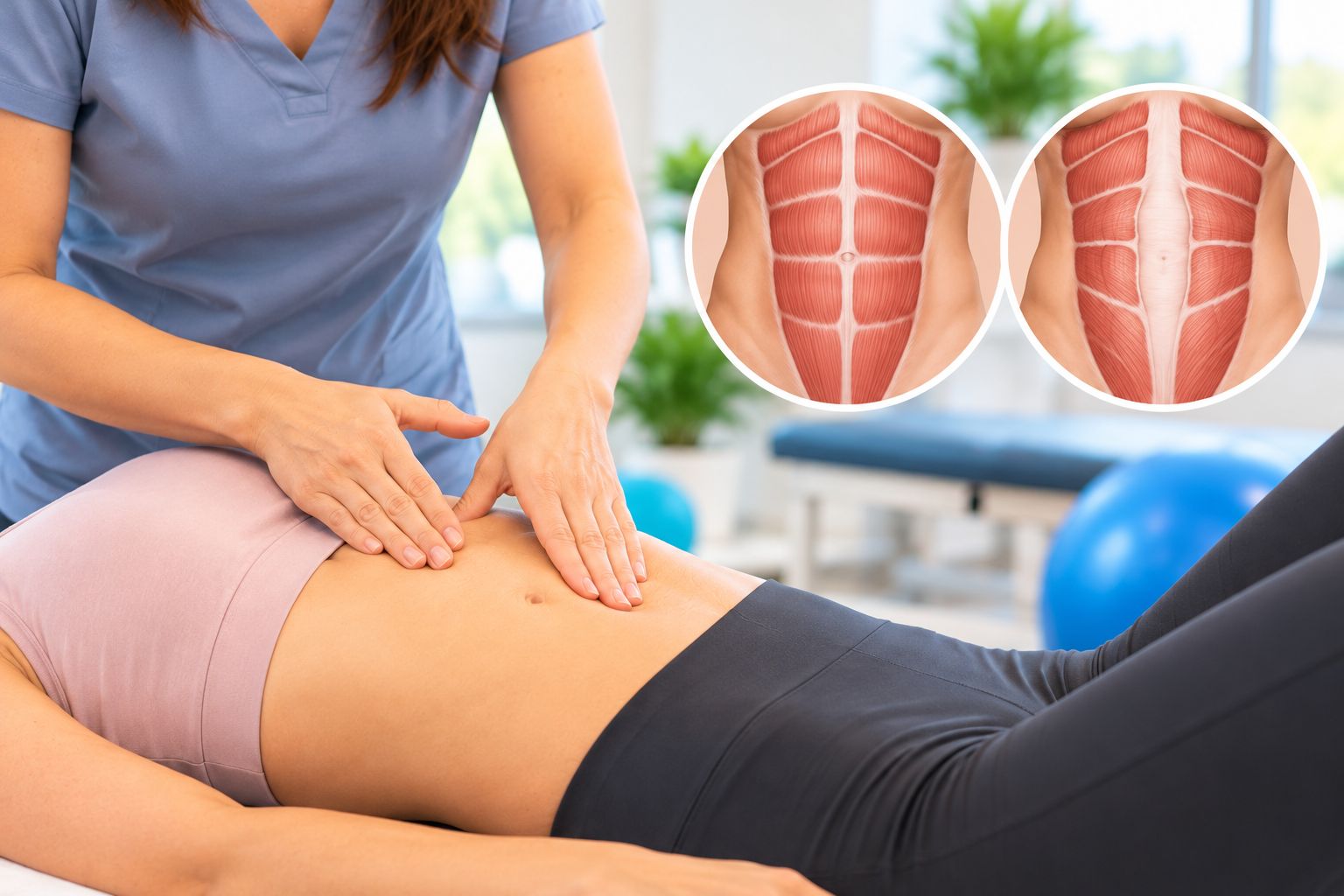
Diastasis recti abdominis (DRA) occurs when the two sides of the rectus abdominis muscles, commonly called the six-pack muscles, move farther apart as the connective tissue between them stretches.
This connective tissue is known as the linea alba.
During pregnancy, the growing uterus places increasing demands on the abdominal wall. This can cause the muscles to separate along the midline.
While some separation is normal during pregnancy, persistent separation may be associated with reduced abdominal wall function.
Common Signs and Symptoms
You may notice:
- A visible bulge or ridge along the middle of your abdomen
- Doming or coning of the abdomen during certain movements
- Reduced core strength
- Difficulty performing abdominal exercises
- A feeling of weakness or reduced abdominal support
- Difficulty lifting or performing everyday activities
Some people with diastasis recti have no symptoms at all. Back pain or pelvic floor symptoms may occur alongside diastasis recti, but they are not necessarily caused by the separation.
How Can Physical Therapy Help?
Physical therapy focuses on improving abdominal wall function, muscle coordination, and overall movement.
Depending on your individual needs, treatment may include:
1. Deep Core Muscle Training
Targeted exercises help improve activation and coordination of the abdominal muscles, including the transverse abdominis.
2. Progressive Abdominal Strengthening
A personalized strengthening program helps improve abdominal muscle function and tolerance for everyday activities.
3. Breathing and Pressure Management
Learning to coordinate breathing with movement can help manage abdominal pressure during lifting, exercise, and daily tasks.
4. Posture and Body Mechanics
Education on lifting, carrying, and functional movements can help improve comfort and confidence.
5. Postpartum Rehabilitation
A gradual exercise program helps individuals safely return to their usual activities, fitness routines, and daily responsibilities.
Can Diastasis Recti Improve Without Surgery?
Yes. Many people improve with conservative management, including exercise and physical therapy.
Research suggests that abdominal exercise programs can reduce the distance between the abdominal muscles in some postpartum women. However, results vary, and current evidence does not establish one exercise program as the best treatment for everyone.
The goal of physical therapy is not simply to close the gap. Improving strength, function, comfort, and confidence is equally important.
When Should You Seek Physical Therapy?
Consider an evaluation if you experience:
- Persistent abdominal bulging after pregnancy
- Difficulty engaging your core muscles
- Weakness during lifting or exercise
- Difficulty returning to your regular fitness routine
- Concerns about abdominal separation or postpartum recovery
An individualized assessment can help determine whether diastasis recti is contributing to your symptoms and identify an appropriate rehabilitation plan.
Diastasis Recti Physical Therapy in New Jersey
At Comprehensive Orthopedic Physical Therapy (COPT), we focus on personalized rehabilitation programs designed to improve strength, mobility, and daily function.
Our physical therapy team can help patients address core weakness and functional limitations through individualized exercise and education.
Take the First Step Toward a Stronger Core!
Contact Comprehensive Orthopedic Physical Therapy to ask about a diastasis recti evaluation and available postpartum rehabilitation services.
References:
Cleveland Clinic (2025). Diastasis Recti: Causes, Symptoms, Diagnosis and Treatment.
Beamish NF, et al. (2025). Impact of Postpartum Exercise on Pelvic Floor Disorders and Diastasis Recti Abdominis: A Systematic Review and Meta-analysis. British Journal of Sports Medicine, 59(8), 562–575.
Effects of Conservative Approaches for Treating Diastasis Recti Abdominis in Postpartum Women (2025). Medicine.